 May 21st 2026
 Posted by AccuSpire
Essential Ophthalmic Diagnostic Equipment: From Basic Tools to Advanced Imaging Systems
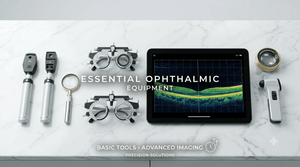
Ophthalmic Diagnostic Equipment
The instruments and imaging technologies powering modern eye care practices.
Modern eye care relies heavily on diagnostic technology. While clinical expertise remains the foundation of ophthalmology and optometry, accurate diagnosis and treatment planning increasingly depend on sophisticated ophthalmic instruments.
For eye care practices, investing in the right diagnostic equipment improves clinical outcomes, enhances patient experience, and supports practice growth. From routine vision assessments to advanced retinal imaging, today's ophthalmic devices enable clinicians to detect, monitor, and manage a wide range of ocular conditions with greater precision.
Why Diagnostic Equipment Matters
Accurate diagnosis is critical in eye care. Early detection of conditions such as glaucoma, cataracts, retinal disorders, and corneal abnormalities can significantly improve treatment outcomes.
Modern ophthalmic diagnostic instruments help clinicians:
As patient expectations continue to rise, advanced diagnostic capabilities have become an important differentiator for eye care practices.
Basic Ophthalmic Diagnostic Instruments
Every ophthalmology or optometry practice relies on a core set of diagnostic tools for routine examinations.
The phoropter remains one of the most widely used instruments in eye care. It is used to:
- Determine refractive errors
- Measure visual acuity
- Refine spectacle prescriptions
- Compare changes in vision over time
Modern digital phoropters improve workflow by integrating with electronic medical record systems and providing automated measurements.
The slit lamp biomicroscope is an essential instrument for comprehensive eye examinations. It allows clinicians to examine:
When combined with specialty lenses, slit lamps also support detailed retinal evaluation. Applications include:
- Cataract assessment
- Dry eye evaluation
- Corneal disease diagnosis
- Conjunctivitis examination
- Contact lens fitting
Advanced Ophthalmic Imaging Technologies
As eye care becomes increasingly technology-driven, advanced diagnostic systems are playing a larger role in clinical decision-making.
OCT has transformed retinal and glaucoma management. Common applications include:
- Macular degeneration monitoring
- Diabetic retinopathy assessment
- Glaucoma evaluation
- Retinal thickness analysis
Systems such as Cirrus OCT provide high-resolution cross-sectional images that assist clinicians in making informed treatment decisions.
Corneal topographers create detailed maps of the corneal surface. These systems are valuable for:
- Refractive surgery screening
- Keratoconus detection
- Contact lens fitting
- Corneal disease monitoring
Visual field testing remains a critical component of glaucoma management. Advanced visual field analyzers help clinicians:
- Detect visual field loss
- Monitor disease progression
- Evaluate neurological visual defects
Consistent testing supports long-term patient management and treatment planning.
Technology and Practice Efficiency
Beyond clinical benefits, modern diagnostic equipment can improve operational efficiency. Benefits include:
Practices that invest strategically in diagnostic technology often experience improvements in both patient satisfaction and workflow management.
Supporting Diagnostic Excellence
While advanced equipment plays a vital role in patient care, supporting instruments and clinical supplies remain equally important. Practices should maintain:
- Well-organized instrument management systems
- Proper sterilization protocols
- High-quality ophthalmic instruments
- Reliable diagnostic accessories
- Efficient examination room workflows
These elements contribute to a safer and more productive clinical environment.
Key Takeaways
- Diagnostic technology is central to modern eye care.
- Basic instruments such as phoropters and slit lamps remain essential.
- Advanced systems such as OCT, visual field analyzers, and corneal topographers improve diagnostic precision.
- Technology investments can enhance both clinical outcomes and operational efficiency.
- Supporting clinical supplies and instrument management systems are critical to maintaining high standards of patient care.
Final Thoughts
The evolution of ophthalmic diagnostic technology continues to transform eye care practices. By combining clinical expertise with advanced diagnostic tools, eye care professionals can improve disease detection, streamline workflow, and deliver a higher standard of patient care.